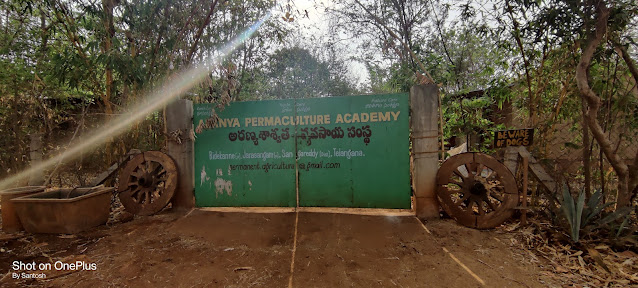
Getting into farming has always been a spectacular wish for me and with it fulfill one’s requirements enough to survive. However, I wasn’t keen on the conventional methods and always wanted to do it the traditional or the symbiotic way. As a precursor, having a garden on the terrace was one of the things I did and churning out own compost from the kitchen was another attempt towards that. But easier than said, challenges overcome needs and with a busy work-life schedule, the garden always took the backseat in the daily life.
"Organic" is an over utilized and abused word in equal measures and it always is inorganically organic, best said. Browsing through ways of alternate methods natural farming, zero budget farming, permaculture were the terms that came up randomly and consistently and all seemed fair and lovely in their own ways and permaculture ways was preferred being heard and seen more regularly in the social media channels and friends.
The more I read, the more I got interested and Permaculture was the way I wanted to pursue with whenever I would own a piece of land. To hone the skills further, I and Raja enrolled to the Permaculture Design Course (PDC) conducted by Narsanna Koppula (pioneer of permaculture in India) Padma Koppula and Sneha Koppula at their farm, Aranya located in Bidakanna village, Zaheerabad, Telangana State, India and for a duration of two weeks.
What followed next was more than what we anticipated. To summarize, we realized that Permaculture is not only about farming practices but more than that, simply put – it’s a way of life and the ethics of Permaculture pretty much describes it beautifully.
Narsanna Sir and Aranya: Sir, as I regard him fondly has been an activist all through his life working for the upliftment of rural communities and an interaction with Bill Mollison (co-originator of Permaculture term) led him to participate in the first PDC in India and has been a pioneer of Permaculture practice in India ever since. Sir and Padma ma’am founded the Aranya Agricultural Alternatives, an NGO in 1999 and ever since they have been helping farmers, rural communities, government organizations manage water resources and grow their own food making them self-sustainable.
Permaculture (or Permanent Agriculture/culture) is based on the below ethics:
· Earth Care – provision for all life systems
· People Care – provision for all people to access resources necessary for existence
· Fair Share – setting limits to consumption by governing our own needs
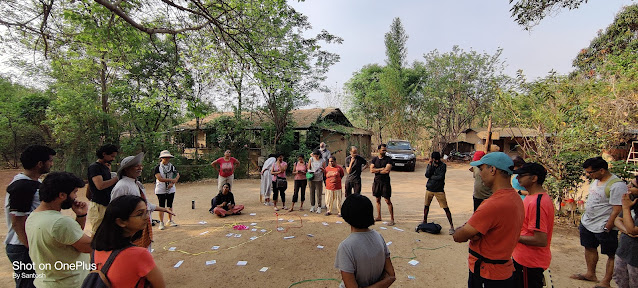
"Do not abuse resources, use them judiciously"
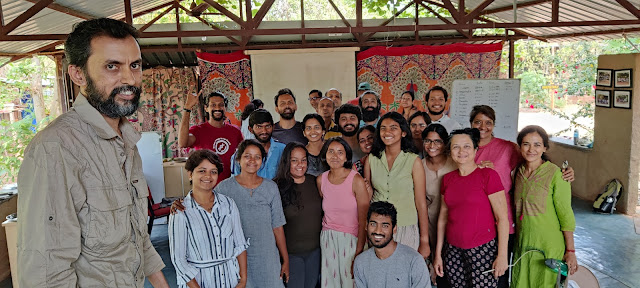
I said this in my feedback, and I repeat here that the 25 of us started off as disjointed, bunch of random seedlings, haphazard in our own ways and pretty much the urban dash tribe (urban dash, used by Sir is often referred to folks from the city who are educated but are actually uneducated and find it hard to relate anything other than their mechanized lives) and by the end of 14 days, we all transformed into a design pattern of a tree (connected, sharing, caring and socially interactive) with Sir being the seed and providing us the raw materials to grow and disperse our knowledge to more people.
“Be in co-operative mode, not competitive mode!”
First couple of days were more theoretical focusing on the basics of permaculture including the ethics, principles, site and sector analysis, needs and yields, designs and patterns, and conveying the importance of water harvesting/management, social permaculture and the critical importance of soil.
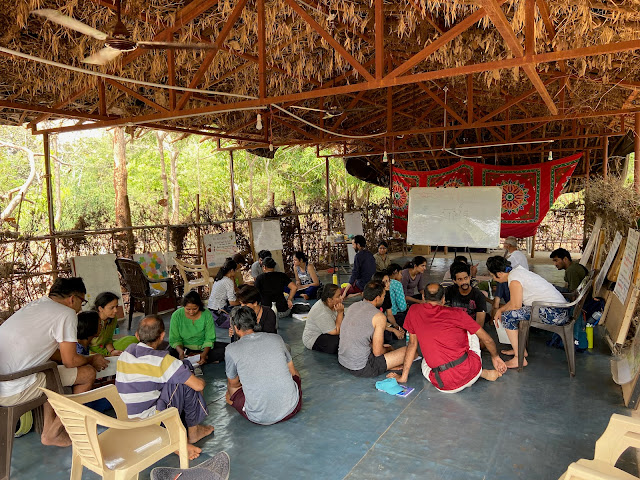

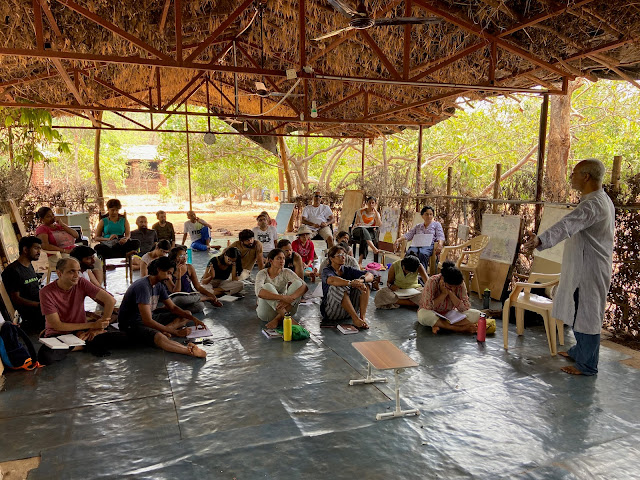
In general, when we talk about nature, it’s mostly about forests, water bodies, air quality, soil erosion and so on and I’ve hardly noticed anyone talk about the importance of soil. All of us are aware that soil is needed but that’s it, there’s no stress on why soil should be conserved, how does soil regenerate, what’s our role in it and honestly how are we trampling the soil in the name of technological advances in the field of agriculture.
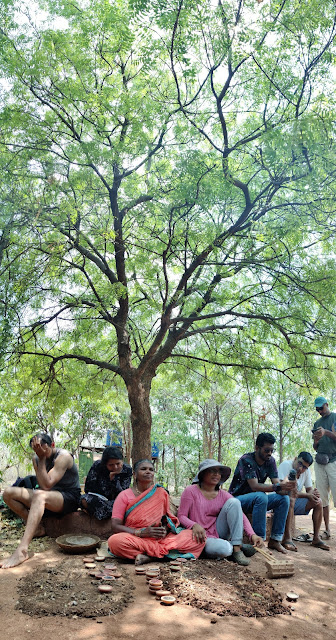
Subsequent days paralleled between more of practical sessions like observation walks, community farms, social interactions with pioneers from the villages (mostly women folk) who have been working with Sir since decades, mock design sessions and exploring Aranya observing the micro-climates, water harvesting techniques, food forests, cropping patterns, composting methods, creating own bio-enzymes, plant identification, soil composition, creating own biochar etc. and few but critical theoretical inputs like the cropping patterns, role of soil, seed preservation techniques, medicinal plants, plant grafting techniques, urban permaculture, weeds and more.
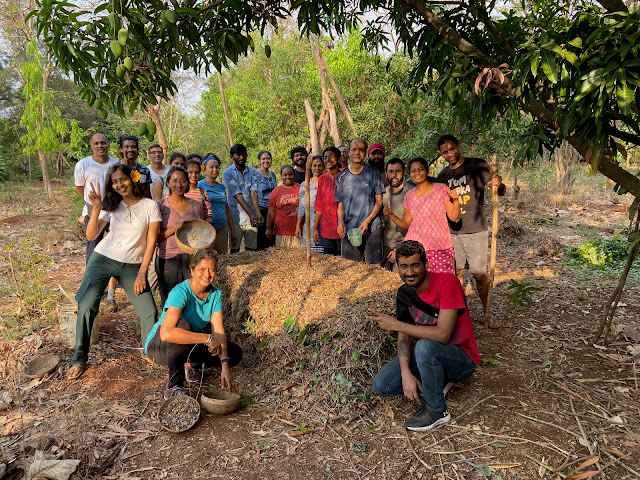

"Weed for one can be food for another"
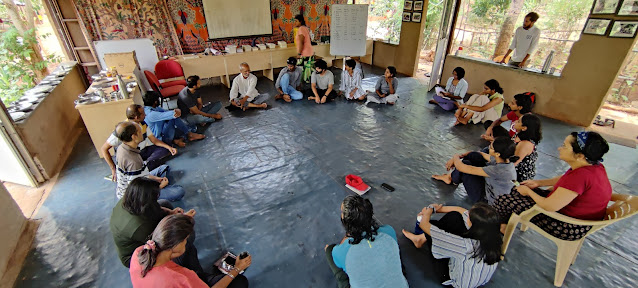
In between all of this, we were randomly sorted into groups of 5-6 people who were given tasks (like designing the nursery area, repurposing open area near the house, grey water management within Aranya, trench digging) that we would spend about an hour every day in the morning. The days mostly began with a starting circle and ended with a close-in circle where I used to be the loudest and speak the longest (tch tch! 'bear with me' or 'bored with me' 😊)
“This has been a Unique batch, very different from the rest – Narsanna sir!” (Well, I was there! the 67th batch of his)
“We were such a great batch, we got a day off in between!”
Key things what I learnt and what others reading this should try to learn:
Importance of water harvesting/management – try to ensure not a drop of water leaves your land (obviously not so if you are located in an excessive water available region)
“Water harvesting is not only about water, its about soil as well”
“Water never travels alone, it carries SOIL along with it”
Soil conservation – how not to till and kill your soil and ways of enriching them to help them heal
“SOIL – Shelter of Invisible Life”
Mulch, mulch and mulch – how critical is it in transforming a barren land into a living paradise
Designs and Patterns – Edges, Nodes, learn from your surroundings to optimize energy and resources
“Edge is where Life Happens”
Wind, Fire, Wildlife threats – Years of hard work can be burnt into ashes within minutes if these factors are not accounted for. Permaculture design has zones limited to use of wild exclusively
Pests and Weeds – how much of a tolerance is needed and how quick!
"A Pest is a Guest"
“Weed is a deed, indeed!”
Compost – Why and how? Cattle dungs, bird droppings, even human waste are great sources if utilized well. This is a critical requirement for any piece of land to enrich, sustain and thrive well
Trees – Windbreaks, Fire-resistant, drought-resistant, hardy, fodder, timber, fruit orchards, pest repellants, medicinal, nitrogen fixers – Don’t pluck anything out unless you are sure it’s harmful
Disaster Management – How prepared are we? Social interaction is a key factor and collaboration with the community helps save and mitigate the damage to lives and the natural resources
“Design for Disaster”
Social Permaculture – in what ways and how? Not everyone can be like Narsanna sir and Padma ma’am but what is the possibility and extent we could do within our individual capacity and it’s not only in practice but also needs to be part of our thinking
“Life has a higher value than money”
Finally, “Don’t forget about the Ethics”
Conclusion:
"Organic" is an over utilized and abused word in equal measures and it always is inorganically organic, best said. Browsing through ways of alternate methods natural farming, zero budget farming, permaculture were the terms that came up randomly and consistently and all seemed fair and lovely in their own ways and permaculture ways was preferred being heard and seen more regularly in the social media channels and friends.
The more I read, the more I got interested and Permaculture was the way I wanted to pursue with whenever I would own a piece of land. To hone the skills further, I and Raja enrolled to the Permaculture Design Course (PDC) conducted by Narsanna Koppula (pioneer of permaculture in India) Padma Koppula and Sneha Koppula at their farm, Aranya located in Bidakanna village, Zaheerabad, Telangana State, India and for a duration of two weeks.
What followed next was more than what we anticipated. To summarize, we realized that Permaculture is not only about farming practices but more than that, simply put – it’s a way of life and the ethics of Permaculture pretty much describes it beautifully.
Narsanna Sir and Aranya: Sir, as I regard him fondly has been an activist all through his life working for the upliftment of rural communities and an interaction with Bill Mollison (co-originator of Permaculture term) led him to participate in the first PDC in India and has been a pioneer of Permaculture practice in India ever since. Sir and Padma ma’am founded the Aranya Agricultural Alternatives, an NGO in 1999 and ever since they have been helping farmers, rural communities, government organizations manage water resources and grow their own food making them self-sustainable.
Permaculture (or Permanent Agriculture/culture) is based on the below ethics:
· Earth Care – provision for all life systems
· People Care – provision for all people to access resources necessary for existence
· Fair Share – setting limits to consumption by governing our own needs
Along with these ethics, there are 12 design principles that one can refer that is based on replicating or imitating natural patterns found in ecosystems. The focus of permaculture is not on individual elements, rather on the relationships among them.
My Experience: The two-week course was intense, joyful, labor intense, fulfilling, tiring (blame the April heat), lazy (blame the good food) and energetic in equal measures and the bunch of 25 of us were equally engaging ourselves to ingest as much as we could from the ever energetic and ever enthusiastic Narsanna Sir. His levels of energy and enthusiasm pretty much would outdo a lot of us, and you are sure to be left very far behind if you ever try to walk with him somewhere, such is his agility and speed.
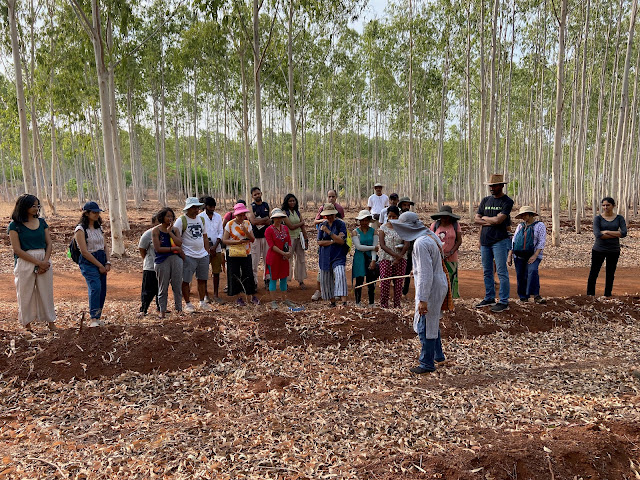
More than being fed content over presentations, the course was more about questions, self-exploration, and making us think and act and the breakout group activities always had an intent behind them to judge the camaraderie of the group members.
My Experience: The two-week course was intense, joyful, labor intense, fulfilling, tiring (blame the April heat), lazy (blame the good food) and energetic in equal measures and the bunch of 25 of us were equally engaging ourselves to ingest as much as we could from the ever energetic and ever enthusiastic Narsanna Sir. His levels of energy and enthusiasm pretty much would outdo a lot of us, and you are sure to be left very far behind if you ever try to walk with him somewhere, such is his agility and speed.
More than being fed content over presentations, the course was more about questions, self-exploration, and making us think and act and the breakout group activities always had an intent behind them to judge the camaraderie of the group members.
"Do not abuse resources, use them judiciously"
I said this in my feedback, and I repeat here that the 25 of us started off as disjointed, bunch of random seedlings, haphazard in our own ways and pretty much the urban dash tribe (urban dash, used by Sir is often referred to folks from the city who are educated but are actually uneducated and find it hard to relate anything other than their mechanized lives) and by the end of 14 days, we all transformed into a design pattern of a tree (connected, sharing, caring and socially interactive) with Sir being the seed and providing us the raw materials to grow and disperse our knowledge to more people.
“Be in co-operative mode, not competitive mode!”
First couple of days were more theoretical focusing on the basics of permaculture including the ethics, principles, site and sector analysis, needs and yields, designs and patterns, and conveying the importance of water harvesting/management, social permaculture and the critical importance of soil.
In general, when we talk about nature, it’s mostly about forests, water bodies, air quality, soil erosion and so on and I’ve hardly noticed anyone talk about the importance of soil. All of us are aware that soil is needed but that’s it, there’s no stress on why soil should be conserved, how does soil regenerate, what’s our role in it and honestly how are we trampling the soil in the name of technological advances in the field of agriculture.
Subsequent days paralleled between more of practical sessions like observation walks, community farms, social interactions with pioneers from the villages (mostly women folk) who have been working with Sir since decades, mock design sessions and exploring Aranya observing the micro-climates, water harvesting techniques, food forests, cropping patterns, composting methods, creating own bio-enzymes, plant identification, soil composition, creating own biochar etc. and few but critical theoretical inputs like the cropping patterns, role of soil, seed preservation techniques, medicinal plants, plant grafting techniques, urban permaculture, weeds and more.
In between all of this, we were randomly sorted into groups of 5-6 people who were given tasks (like designing the nursery area, repurposing open area near the house, grey water management within Aranya, trench digging) that we would spend about an hour every day in the morning. The days mostly began with a starting circle and ended with a close-in circle where I used to be the loudest and speak the longest (tch tch! 'bear with me' or 'bored with me' 😊)
“This has been a Unique batch, very different from the rest – Narsanna sir!” (Well, I was there! the 67th batch of his)
“We were such a great batch, we got a day off in between!”
The final couple of days were reserved for the final design planning where a custodian would provide a piece of land with requirements and as designers the group would debate, interact, question and chart out detailed design maps and present it to the overall group. That was intense, labor intensive, time consuming but soon I realized that there was so much I had learnt over the two weeks and there was so much more to learn in the future
We were very well fed through the day with various dishes, drinks, and fruits to top it off and most of them sourced from the community network or grown in Aranya that indeed was relative to the concept of our own food forest. The whole campus was teeming with life of all forms and being interested in nature, I had a great time observing birds, butterflies, bugs, insects, patterns and a lot more, thanks to Sneha for the binoculars that was a saving grace for me.
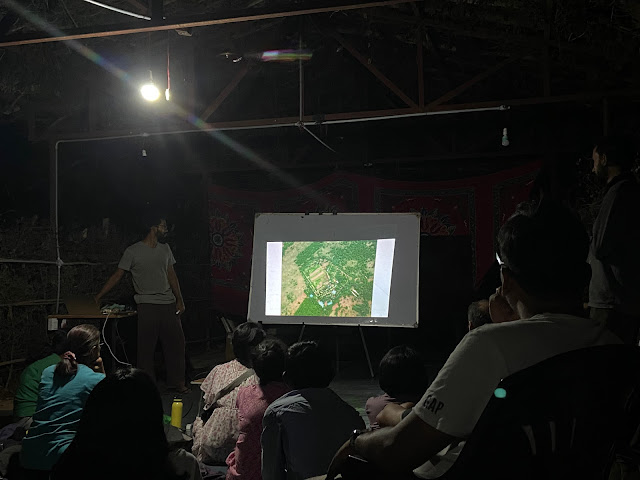
Aranya, to describe is a world in itself; self-sufficient to a large extent – cowshed, chicken coop, natural buildings, seed bank, tents and dormitory for the visitors, utilizing solar energy where feasible, fruit orchards, vegetable gardens, maximizing water usage (so as to not let anything flow as waste), local community resources (who work in the kitchen and the farm) who are residents along with the Koppula family; their daughter Sneha who has studied and lived in the states and now back to the roots; their dogs – Ginger (the undisputed and unpredictable king and a fierce protector), Papoos, Jam and Chotu; the ever energetic and smiling volunteers (currently they are Aadi, Jayoti and Praneeth) who are much more than volunteers here; the numerous beehives or the termite mounds; women folk from the community who consider Aranya their home (Samamma and Thulajamma and others); the resident monitor lizard or the tickell’s blue flycatcher; the numerous organisms and micro-organisms that thrive here (testimony to the fact that Aranya has a pretty dense green cover even during the hot April and the temperatures were slightly lower than the outer areas that had no cover and bore the brunt of the summer sun) and there is always something happening at any time of the year.
Compare this to the thousands of acres of reserve forest surrounding Aranya where native tree species are mostly replaced by Eucalyptus and Acacia plantations in a dry land region where water is a prime commodity and adding insult to it are the badly planned trenches all along for the rainwater (they looked more like to help the water run off with all the soil rather than hold them back), human made fires to help propagate the tendu shoots better (the famous beedi leaves!).
“Where is the Thinking!”
“Forests are for regeneration, not revenue generation!”
Terminologies that you get familiar in Permaculture:
We were very well fed through the day with various dishes, drinks, and fruits to top it off and most of them sourced from the community network or grown in Aranya that indeed was relative to the concept of our own food forest. The whole campus was teeming with life of all forms and being interested in nature, I had a great time observing birds, butterflies, bugs, insects, patterns and a lot more, thanks to Sneha for the binoculars that was a saving grace for me.
Aranya, to describe is a world in itself; self-sufficient to a large extent – cowshed, chicken coop, natural buildings, seed bank, tents and dormitory for the visitors, utilizing solar energy where feasible, fruit orchards, vegetable gardens, maximizing water usage (so as to not let anything flow as waste), local community resources (who work in the kitchen and the farm) who are residents along with the Koppula family; their daughter Sneha who has studied and lived in the states and now back to the roots; their dogs – Ginger (the undisputed and unpredictable king and a fierce protector), Papoos, Jam and Chotu; the ever energetic and smiling volunteers (currently they are Aadi, Jayoti and Praneeth) who are much more than volunteers here; the numerous beehives or the termite mounds; women folk from the community who consider Aranya their home (Samamma and Thulajamma and others); the resident monitor lizard or the tickell’s blue flycatcher; the numerous organisms and micro-organisms that thrive here (testimony to the fact that Aranya has a pretty dense green cover even during the hot April and the temperatures were slightly lower than the outer areas that had no cover and bore the brunt of the summer sun) and there is always something happening at any time of the year.
Compare this to the thousands of acres of reserve forest surrounding Aranya where native tree species are mostly replaced by Eucalyptus and Acacia plantations in a dry land region where water is a prime commodity and adding insult to it are the badly planned trenches all along for the rainwater (they looked more like to help the water run off with all the soil rather than hold them back), human made fires to help propagate the tendu shoots better (the famous beedi leaves!).
“Where is the Thinking!”
“Forests are for regeneration, not revenue generation!”
Terminologies that you get familiar in Permaculture:
Guilds, Circles, Raised Beds, Edges and Nodes, Trenches, Crescents, Swales, A frame, mulching, nitrogen fixers, contours, windbreaks, zones, layering, gully plugs, percolation tank, brushwood etc...
Key things what I learnt and what others reading this should try to learn:
Importance of water harvesting/management – try to ensure not a drop of water leaves your land (obviously not so if you are located in an excessive water available region)
“Water harvesting is not only about water, its about soil as well”
“Water never travels alone, it carries SOIL along with it”
Soil conservation – how not to till and kill your soil and ways of enriching them to help them heal
“SOIL – Shelter of Invisible Life”
Mulch, mulch and mulch – how critical is it in transforming a barren land into a living paradise
Designs and Patterns – Edges, Nodes, learn from your surroundings to optimize energy and resources
“Edge is where Life Happens”
Wind, Fire, Wildlife threats – Years of hard work can be burnt into ashes within minutes if these factors are not accounted for. Permaculture design has zones limited to use of wild exclusively
Pests and Weeds – how much of a tolerance is needed and how quick!
"A Pest is a Guest"
“Weed is a deed, indeed!”
Compost – Why and how? Cattle dungs, bird droppings, even human waste are great sources if utilized well. This is a critical requirement for any piece of land to enrich, sustain and thrive well
Trees – Windbreaks, Fire-resistant, drought-resistant, hardy, fodder, timber, fruit orchards, pest repellants, medicinal, nitrogen fixers – Don’t pluck anything out unless you are sure it’s harmful
Disaster Management – How prepared are we? Social interaction is a key factor and collaboration with the community helps save and mitigate the damage to lives and the natural resources
“Design for Disaster”
Social Permaculture – in what ways and how? Not everyone can be like Narsanna sir and Padma ma’am but what is the possibility and extent we could do within our individual capacity and it’s not only in practice but also needs to be part of our thinking
“Life has a higher value than money”
Finally, “Don’t forget about the Ethics”
Conclusion:
All in all, well spent two weeks of my life; lots of things to introspect and retrospect; plenty of confidence to progress into creating a food forest (farming) the way I would want it; many inspiring people like the power couple, Sneha, Aadi, Sonali, Nikhil, Raj; and now a member of the fast-growing permaculture tribe in India
If you can spare two weeks, head over to https://permacultureindia.org/up-coming-courses/ and register for the next batch and do remember to cite my reference, my legacy will stay! lol!
Follow them on Facebook, Instagram or on the Web.
Some random observations/impressions of the folks:
1) Trisha: Kutty paapa
If you can spare two weeks, head over to https://permacultureindia.org/up-coming-courses/ and register for the next batch and do remember to cite my reference, my legacy will stay! lol!
Follow them on Facebook, Instagram or on the Web.
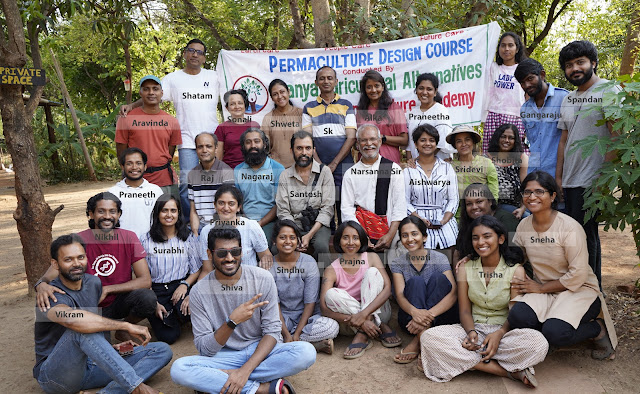
Some random observations/impressions of the folks:
1) Trisha: Kutty paapa
2) Aishwarya: aspirational
3) Sindhu: Teacher amma
4-5) Praneetha/Priyanka: Two sides of the same coin
6) Shweta: Happy
7) Sonali: Expert
8) Prajna: Queen Bee
9) Shobita: Silent laughter
10) Alka: Nursing lives
11) Vihitha: Question bank
12) Surabhi: Silent architect
13) Sridevi: Laughing machine
14) Revati: Vegan
15) Shiva: Hybrid
16) Nikhil: vlogger
17) RajMahendra: Been there, done that!
18) Aravinda: It’s hot!
19) Shatam: Cool cucumber
20) Vikram: Coach
21) Nagaraj: Silence is golden
22) Spandan: Future innovator
23) Gangaraju: Son of the soil
24) Sk Chouhan: I have the answer, do you have a question
25) Santosh (self): Babbler
26) Sneha: Family love
27) Praneeth: Who am I!
28) Aadi: Water
29) Jayoti: Living life
30) Padma ma’am: Ever smiling
31) Narsanna sir: tata birla ram ram!


